Filtering the Fitness Noise
The fitness world is full of bold claims, flashy fads, and endless contradictions.
Should you lift heavy or light? Train compounds or isolations? Rest short or long? Stick to strict form or use cheat reps? Bulk or cut? High or low volume? It can all feel overwhelming.
The truth is, there isn’t one universal answer. Context matters, goals matter, and what works for one person may not work for another.
This blog isn’t here to tell you what to do. It’s here to cut through the misinformation, share insights from experience and research, and help you explore what truly works for your body, your lifestyle, and your goals.
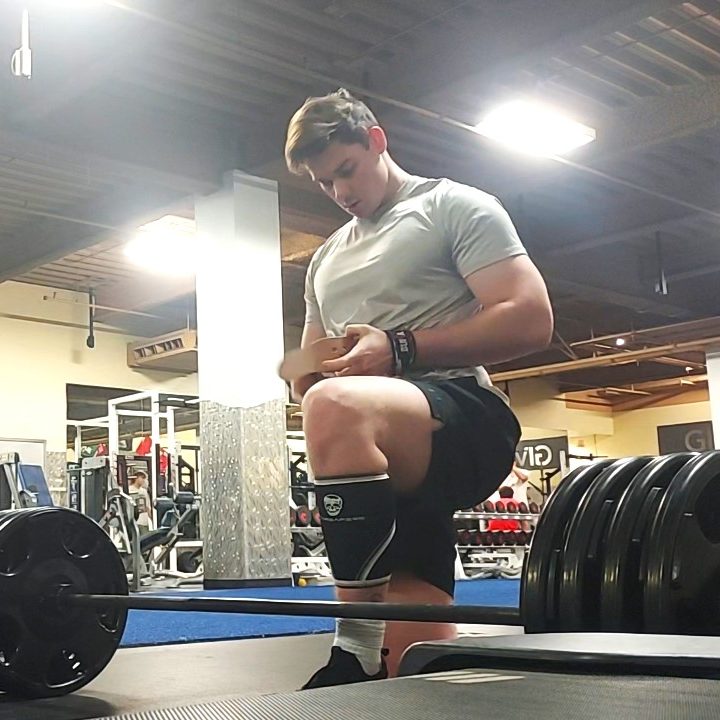
Train. Discover. Transform.
"Lifting weights will make me bulky."
You’ve probably heard it before, or maybe even thought it yourself,
It’s a line that pops up so often, it almost feels like part of the gym décor. It’s one of the most common gym fears, and it keeps countless people circling the treadmill instead of exploring the weight room. But here’s the truth. Lifting weights doesn’t automatically make you look like a bodybuilder. In fact, it can transform your strength, health, and confidence in ways cardio alone rarely can.
Muscle growth, or muscular hypertrophy, isn’t magic either; it’s a process. Lopez et al. (2021) found that untrained and recreationally trained individuals can see similar increases in muscle size across different resistance loads, as long as exercises are performed to fatigue. In other words, you don’t need to lift the heaviest weights in the gym to grow muscle. Consistency, effort, and progressive challenge are what truly matter. Heavier weights, on the other hand, tend to produce faster strength gains, which can make your lifts feel easier over time, but neither guarantees a bulky physique.
Think about it like planting a tree. You water it, tend to it, and give it sunlight every day. Over time, it grows steadily. The same principle applies to muscle: regular, intentional training over weeks and months produces measurable change. Dramatic results don’t just happen overnight, and “bulk” is rarely the default outcome. This is evident in a study performed by Westcott (2012), which highlights that while resistance training enhances health, strength, and performance, significant increases in muscle size require long-term commitment.
Women, in particular, often worry about becoming “too muscular.” Although understandable, research consistently shows that strength training benefits women by improving muscle and bone health, without causing excessive hypertrophy (University Hospitals, 2024). I’ve seen women start hesitant, lifting lighter weights out of fear, only to discover that after being challenged, their strength and definition improved dramatically over a few months while their overall physique remained lean and natural.
Even for men, getting “bulky” is not as easy as pop culture might suggest. Natural muscle growth takes time, proper nutrition, and a focused training plan. You won’t accidentally become oversized by picking up a few dumbbells a few times a week. What you will gain is strength, better posture, and a defined, functional physique that supports everyday life.
More senior individuals that I have coached commented that they felt taller, more confident, and capable of lifting objects at home that used to feel heavy, without looking like they’d joined a bodybuilding competition.

So, does lifting weights really make us bulk like the Hulk?
The answer? A clear no...
Muscle doesn’t just appear overnight; it takes time, consistency, and intentional training.
Change your mindset, fatigue yourself with more challenging weights to build muscle, or play around with heavier loads to boost your strength.
And the next time you find yourself avoiding the dumbbell rack, ask yourself why?
What do you really want from your training?
If it’s to feel stronger, healthier, and more confident, well, that’s exactly what resistance training delivers.
I'll see you in the weight room.
Train. Discover. Transform.
More sweat, more fat loss, right?
The floor’s slick, your shirt’s clinging to you, and your towel’s doing overtime. You look around the gym and think, “Now that’s a good session, I must’ve burned a ton of fat.”
Sweat has become the gym badge of honour, a visible sign that you’ve worked hard and pushed yourself, so it's easy to fall into the trap that sweat equals progress; after all, it is proof of your hard work.
But as satisfying as that post-workout shine is, the truth hits a little different.
Sweat is mostly water and electrolytes and plays a large part in your body’s temperature regulation system; it's not a fat-burning mechanism. Research has shown that the amount you sweat has more to do with your body’s heat response than how much fat you’re losing. For instance, Buono et al. (1988) found that trained athletes tend to sweat more than untrained individuals at the same workload. It's not because they’re burning more fat, but because their bodies are more efficient at regulating heat. The difference? The environment, their genetics, hydration, and training level.
To actually lose fat, you need to burn more calories than you consume. That’s the core principle, and research confirms this. A 2021 study, Leroux-Stewart et al. (2021), showed that people who combined diet with exercise lost significantly more fat than those who just dieted, proving that fat loss comes from creating an energy deficit. Similarly, another study, Iwayama et al. (2015), recognised the importance of timing. Exercising before breakfast can boost fat burn over the course of the day compared to the same workout later, highlighting that timing and metabolic state matter more than temperature or perspiration.
During university lab sessions, it was common to see peers drenched in sweat as they pushed through their VO₂ max tests, but this was a show of performance, not fat loss. So, adapting this, through running FatMax protocols, the focus shifted. These tests pinpointed the intensity at which fat burning peaked before the body leaned more on carbs. It was a fascinating contrast: sweat levels soared in both, yet the true measure of fat use came down to energy balance, not perspiration. Even when someone reached their “fat-burning zone,” the results made it clear that without a calorie deficit, there was no change in total body fat. It should also be understood that the FatMax protocol proved useful for understanding how the body fuels exercise, but not as a shortcut for losing fat.

So, is that puddle on the floor really helping you to lose fat?
Imagine two people finishing the same resistance circuit. One drenched on a humid summer day, the other barely breaking a sweat in an air-conditioned gym.
Who burned more fat?
Most likely neither. The outdoor athlete just sweated more to stay cool. Once they both rehydrate, their bodies will return to normal again.
So next time you see someone leaving the gym dripping, don’t assume they’ve burned more fat than you. You did great, and so did they.
What really counts is consistency, good nutrition, and proper recovery. Sweat is just a sign your body’s doing its job.
Real progress comes from patience, not perspiration.
Train. Discover. Transform.
Can you really target fat loss?
You crunch, you curl, you plank, and still the stubborn belly fat and bingo wings refuse to budge. Everywhere you look, someone promises that targeting that one troublesome spot will finally melt it away. It feels like it should work as well. You train the area, burn the fat, problem solved.
But here’s the catch: your body doesn’t play by those rules.
The idea that you can burn fat from a specific area, like doing crunches for a flatter stomach, has been around forever. Physiologically, that isn’t how fat loss works. When you exercise, your muscles use stored glycogen for energy. Fat, on the other hand, is mobilised throughout the body. Where it comes from depends on hormones, genetics, and your overall energy balance. You can’t simply tell your body to burn fat from one spot.
A simple experiment by Katch et al. (2013) tested this by having participants perform daily sit-ups for 27 days. What was great about this study is that the participants showed slight improvements in abdominal strength with some changes to body fat. However, upon closer inspection, the total body composition revealed that muscles can adapt due to exercise stimulus, but fat loss occurred across the entire body and at different rates for individuals.
Ramírez-Campillo et al. (2013) also found a similar occurrence when looking at whether training one leg exclusively could lead to more fat loss on that side. After 12 weeks, participants lost the same amount of fat on both legs. Reconfirming that the body doesn’t just withdraw energy from anywhere; it pulls from the whole body. You might be training your arms, but your body could be tapping into fat stores from your back, hips, or legs to fuel the effort.
So why does it sometimes feel like it’s working? That burning sensation in your abs or arms is simply muscle fatigue, caused by a buildup of lactic acid. The “tightness” that follows is a temporary muscle pump, not fat disappearing from that area.
What truly works for fat loss is maintaining a consistent calorie deficit supported by smart training and nutrition. Ross et al. (2000) found that combining general exercise with dietary control significantly reduced total body fat and waist circumference, even without targeting the core. In fact, participants who trained their whole body saw greater reductions in abdominal fat than those who focused solely on their midsection.
Resistance training plays a key role in this process. It burns calories, preserves lean muscle, and keeps your metabolism elevated long after your workout ends. Over time, this makes your body more efficient at using fat for energy, though not from one specific spot.

So, can isolated training really result in isolated fat loss?
No...
Stop chasing the quick ab workouts that promise you'll burn fat from a single spot fast. Focus on consistent training, building muscle, and managing your nutrition.
As your overall body fat decreases, the muscles you’ve worked will naturally become more defined.
And even though you can’t control exactly where your body loses fat, by increasing muscle mass, staying active, and maintaining a calorie deficit, you improve your body’s ability to use fat for energy.
Stick to the process, and over time, results will appear naturally and sustainably.
Train. Discover. Transform.